The château, twice
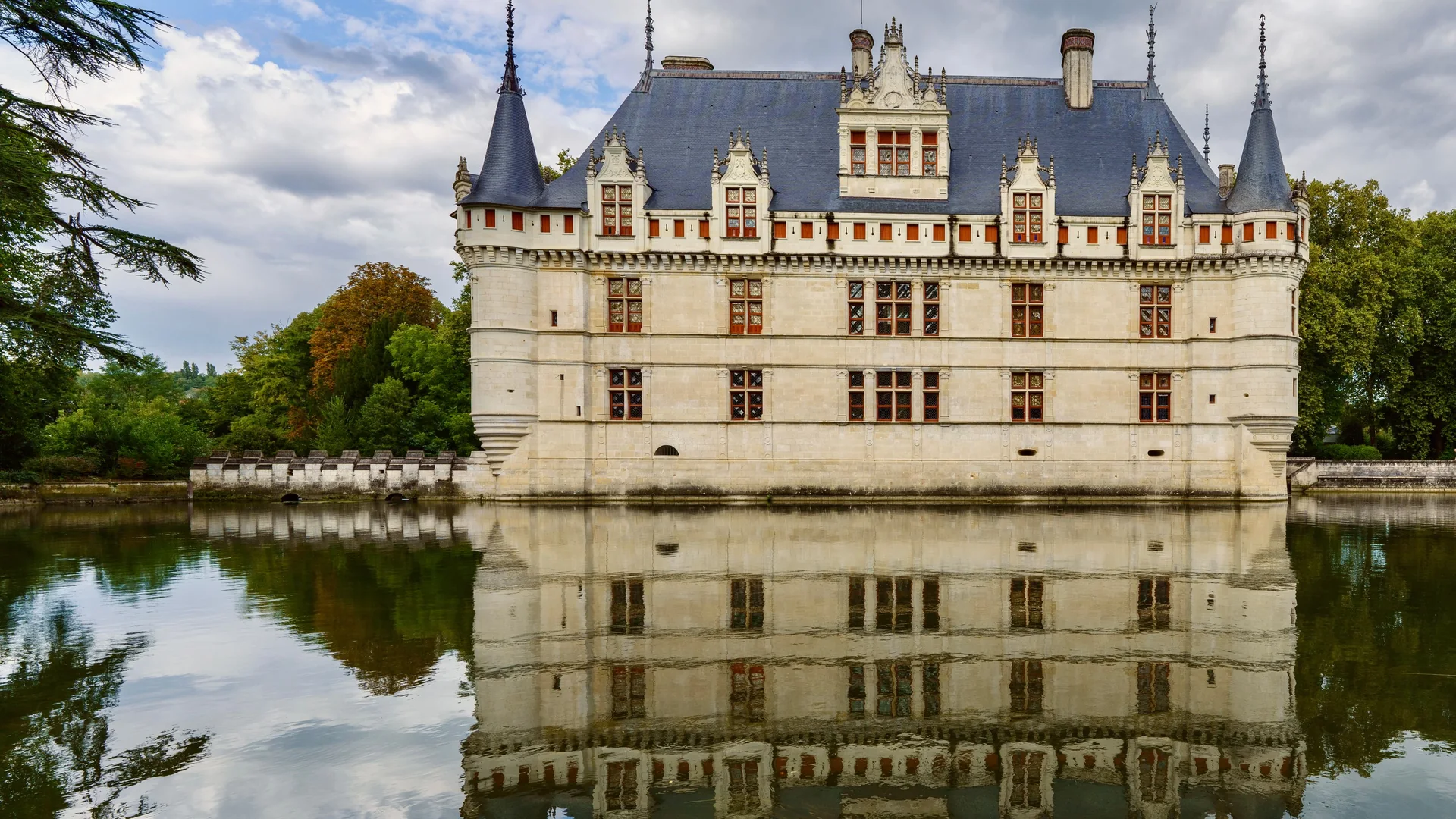
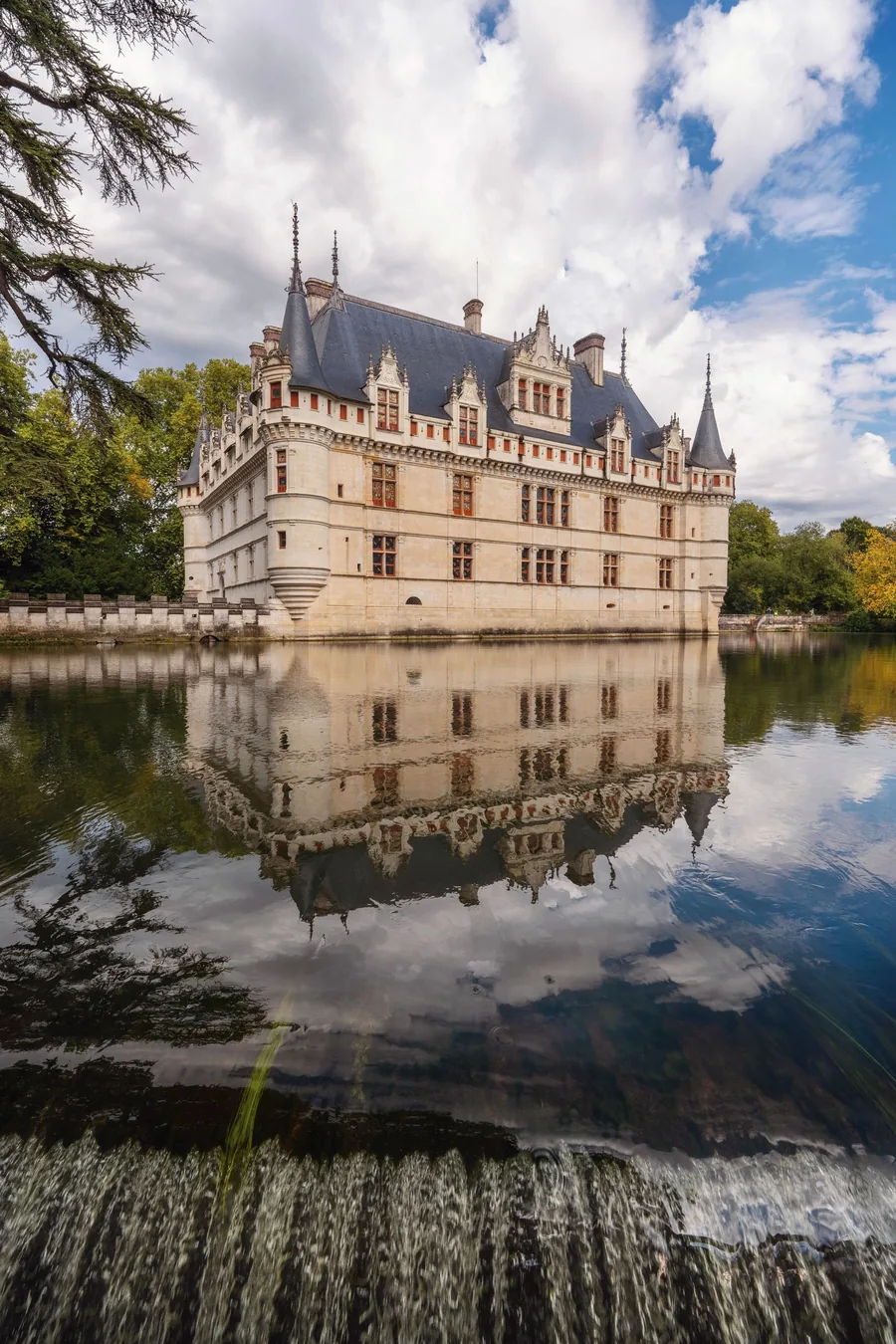
Azay-le-Rideau is seen in two halves: the stone above the Indre, and its double in the water below. Here is the visit as both halves, room by room and view by view.
-
The island
A château that stands in its own moat
Built between 1518 and 1527 on an island in the river Indre, the château's walls rise from the water's edge — the river is the setting, not a defence added to it.
-
The staircase
A straight climb where France still built spirals
Behind open Italianate loggias, the honour staircase rises in straight flights instead of the spiral that was still usual at the time; it is described as the oldest surviving staircase of its kind in France.
-
The Biencourt rooms
A century of one family's taste
The Biencourts owned the château from the late 18th century until 1899 and reworked it in the 19th; the Biencourt salon and the apartments around it have been restored and refurnished to show their era.
-
The park
Grounds built to frame a view
The English-style park was laid out by the Biencourts in the 19th century; the two reflecting pools known as water mirrors were added in 1950.
-
The water's edge
Where the second château appears
Stand by the water on a still morning and the turrets, the steep roofline and the pale stone repeat themselves below — the view most visitors come for.
Wind is the variable that matters most here — a still, windless spell gives a far cleaner mirror than any particular hour of the day.
What a visit actually involves
A château that was never quite finished
Gilles Berthelot, a royal treasurer, began building in 1518 and fled the country in 1527 before the work was done, so only the south and west wings were ever completed. That abandoned plan is why the building reads as an L rather than a square.
The park is a later addition
The château is early Renaissance, but the English-style landscaped park around it was created by the Biencourt family in the 19th century, and the two reflecting pools known as water mirrors were added in 1950.
A compact visit, not a half-day fortress
The château is small by Loire standards: the staircase and the furnished rooms, then a loop of the park, fit comfortably into about two hours, which leaves room for a second visit nearby on the same day.
Part of a wider listing, not a standalone site
Azay-le-Rideau lies within the Loire Valley's UNESCO World Heritage listing, which covers the stretch of river landscape between Sully-sur-Loire and Chalonnes rather than any single building.
Guides to the château
Choosing a château
Azay-le-Rideau, Villandry or Chenonceau
Three very different days near Tours — reflections, gardens or river-spanning drama — and how they fit into one trip.
Read the guide →Getting there
How to get to Château d'Azay-le-Rideau from Tours or Paris
The Tours–Chinon line train, the TGV route from Paris, and driving the Loire by car.
Read the guide →Timing
The best time to visit Château d'Azay-le-Rideau
Seasons, the daily rhythm, and the still light that gives the clearest reflections.
Read the guide →With children
Visiting Château d'Azay-le-Rideau with kids
Why the compact island château is one of the easier Loire visits with children, and how to pace the day.
Read the guide →Inside
What to see at Château d'Azay-le-Rideau
The reflection, the honour staircase, the Biencourt rooms and the park — and the order worth seeing them in.
Read the guide →Questions readers ask
Is this run by the château or the Centre des monuments nationaux?
No. Azay Reflections Guide is an independent visitor guide with no tie to the Centre des monuments nationaux, which manages Azay-le-Rideau. Bookings made from this page go through Viator. The monument's own website is at azay-le-rideau.fr.
Can I bring a pushchair or a picnic?
Pushchairs are allowed in the park but not inside the château, and picnics aren't permitted in the grounds, according to the château's own practical information.
What is the honour staircase?
A staircase rising in straight flights behind open Italianate loggias, built in the 1520s when a spiral was still the usual form in France. It is described as the oldest surviving staircase of its kind in the country.
How do I get to Azay-le-Rideau from Tours or Paris?
From Tours, the SNCF Tours–Chinon line runs to Azay-le-Rideau station, about 2.1 km from the château — a walk through the village or a short taxi. From Paris, a TGV to Tours or Saint-Pierre-des-Corps takes roughly an hour to an hour and a quarter, then the same local connection.
Is Azay-le-Rideau good for children?
It tends to work well with children because it is small: the visit fits into a couple of hours and the park gives children room to move afterwards. Pushchairs are allowed in the park but not inside the château.
When are the reflections at their best?
In still, low light — the first hour after the château opens, or the last light before it closes — when the air is calm and the water on the Indre sits unbroken.
How much time does a visit to Azay-le-Rideau take?
Roughly two hours is a comfortable allowance: most of it for the rooms and the staircase, the rest for the park and the water mirrors.
How does Azay-le-Rideau compare with Villandry?
Azay-le-Rideau's draw is its architecture and its reflection in the Indre; Villandry is best known for its Renaissance-style gardens, recreated in the early 20th century. The two are close together south-west of Tours, and many visitors pair them on the same day.